
Remember that these workouts, specifically plyometrics exercises for speed, involve a great deal of jumping and bounding movements. These fast, explosive movements help athletes and fitness enthusiasts build strength, speed, agility (the ability to rapidly change direction, slow down, or speed up), and power (the ability to overcome resistance quickly). By combining ballistic and plyometric exercises in one workout, you can maximize the benefits of both styles of training and challenge your muscles in different ways. Just remember to prioritize proper form, safety, and gradual progression to achieve optimal results while minimizing the risk of injury. Ballistic exercises are dynamic, explosive movements that involve rapid acceleration and maximal effort, often with the aim of exerting maximum force in a short period. These exercises involve multiple joints and muscle groups working together to generate power, speed, and strength.
- If this is your case, you should opt for lower-impact calisthenic exercises.
- In summary, plyometric training shows promise in enhancing multidirectional agility, though variations in test sensitivity and participant characteristics may affect outcome consistency.
- Plyometrics, on the other hand, focuses on explosive power and speed, making it ideal for athletes.
- These findings suggest that plyometric training is not an effective method for improving aerobic endurance in trained populations, particularly when compared to sustained aerobic conditioning protocols.
- The fall in peak torques immediately after eccentric exercises has been reported in different muscles, like in knee flexor56, ankle extensor57, and other muscle groups58,59.
- Calisthenics exercises refer to a wide variety of bodyweight exercises that help improve your muscular strength and overall fitness level.
To summarize the current knowledge on the topic and to identify possible methodological limitations in published meta-analyses, an umbrella review might be conducted [25], as this kind of review is considered on the highest level of the evidence pyramid [26]. Umbrella reviews highlight findings from already published meta-analyses, providing the state of the art about a given overarching topic with a high number of publications. Thus, they can help the reader to understand the current strengths and limitations of the entire body of literature on a specific topic from different perspectives and applications. Plyometric training enhances the elasticity of muscles and tendons and improves neuromuscular efficiency by promoting rapid transitions between eccentric and concentric contractions, referred to as the “stretch–shortening cycle”8. Recent studies have shown that the SSC enables storage and rapid release of elastic energy during eccentric–concentric transitions, enhancing force output and mechanical efficiency9. Plyometric training can change the length of fascicles in the vastus lateralis and rectus femoris muscles, as well as increasing the pennation angle of the rectus femoris.
Benefits of Plyometrics:
Give your body time to adjust and build strength before trying advanced explosive exercises. You will not do the same number of repetitions at the beginning and a couple of months later. What you find hard at first will be simple once your body strengthens. You need to be very careful when performing these types of exercises since the risk of injury is high.
Vertical jump performance
As long as you take the time to learn basic forms, however, the practice can build explosive power so you can jump higher, swing a racket harder, and take off from a starting line faster. The higher workout intensity and explosive movements of plyometric training can put tremendous strain on the body and joints. This subsequently increases the chances of injury if you are not careful. And if you are already suffering from poor joint health, we would advise you against undertaking such exercises. While plyometric exercises are used to help increase muscle power – the body’s ability to perform an activity quickly and repeatedly by applying a given force (7) – they can also help build muscles. According to WebMD, plyometrics exercises are a type of workout training that uses speed and the force of different movements to build muscle power.
Details of training programs in three groups
This is especially important if you have any medical concerns, injuries, or take any medications. In the second phase, the full-text articles were obtained for the selectedabstracts and were reviewed again independently by 2 reviewers. As before, athird reviewer made the decision to include the study in the analysis if aconsensus could not be reached by the 2 initial reviewers. This section collects any data citations, data availability statements, or supplementary materials included in this article.
Plyometric Training for Explosive Power, Speed, and Strength
“It will be a sufficient stimulus to maintain or at least decrease the amount that your cardiovascular fitness would drop if you needed to take an extended period of time off,” he says. Over time, your joints, muscles, and fascia adapt to what you do most. So, if you lack sideways or rotational movement, you may experience mobility issues, which can lead to problematic movement compensations or a lack of flexibility. If you are just getting started, our beginner’s guide to calisthenics will help you build the foundation. If you are ready for a structured program, try our 30-day beginner program or the intermediate program if you already have a training base.
The Narrow Handlebar Trend: Aerodynamics vs. Control
These exercises utilize the stretch-shortening cycle of muscles, where the muscles are rapidly stretched (eccentric phase) and then immediately contracted (concentric phase). Common plyometric exercises include box jumps, clap push-ups, lateral bounds, and burpees. As a result, VO2max did not significantly improve, indicating that cardiovascular function and endurance were not sufficiently developed. These findings suggest that plyometric training is not an effective method for improving aerobic endurance in trained populations, particularly when compared to sustained aerobic conditioning protocols. This review provides in-depth corroboration that plyometrics training also has a negligible effect on VO2max107. In competitive sports, exceptional physical fitness and athletic performance are key determinants of success.
Risk of bias of individual studies
The study hypothesized that there is a significant difference between plyometric and strength training in soccer players. A progression of plyometric intensity is always prudent, especially in those returning to activity from previous injury. Generally two best nutritionist app legged drills are a good starting point for low to medium intensity drills. Forward, backward and lateral step ups and downs from progressively increasing heights are a good first step and provide low intensity stimulus in a plyometric fashion. Controlled testing of limbs can be performed by using shuffling, and carioca drills to determine readiness to advance loading. Vertical jumping and horizontal and medial to lateral bounding are a few other ways as are running and jogging in place.
Lateral jump
This review demonstrates that the traditional, assisted and resisted plyometric methods can be recommended as effective training modalities for augmenting vertical jump performance. To sum up, the assisted and resisted plyometrics are as effective as traditional plyometrics. Therefore, there is no robust evidence to suggest that the traditional plyometric method should be substituted by the assisted and resisted methods in the jump training of adults. Further research with greater sample sizes of athletes is required to examine the effects of assisted and resisted plyometric methods on jumping performance in sports training. Body fat percentage shows a negative correlation with athletes’ vertical jump and sprint performance117,118. Plyometric training effectively reduces body fat percentage, further supporting its ability to enhance strength and athletic performance in a short period.
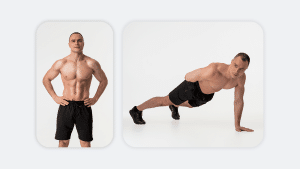
Advantages Of Calisthenics Workouts
Calisthenics are frequently found in practically any genre of physical training, including bodybuilding, athletic training and even certain portions of physical therapy. According to Healthline, if your goal is strengthening a specific muscle group, weightlifting may work better as this allows you to effectively overload the muscle in question. This overload creates tears which repair and make the muscle stronger.

At the same time, doing plyometric exercises correctly has been shown to help prevent injury. Also known as jump training, plyometric exercises are usually geared toward highly trained athletes or people in peak physical condition. However, they can also be used by people wishing to improve their fitness.
Our impact
Intensity is the actual percentage of effort required by the athlete to perform the activity. In plyometrics, the type of exercise performed controls the intensity. Some activities such as bilateral jumping to a box are lower level plyometrics while others such as single leg jumps from a box are intense. These variables must be considered when designing conditioning or rehabilitation programs. In the late 19th and early 20th centuries, calisthenics found a foothold in schools and physical education programs, emphasizing the importance of bodyweight movements for developing strength and coordination.
To serve her diverse patients, she demonstrates cultural sensitivity and knowledge of customary food practices. She applies the tenets of lifestyle medicine to reduce the risk of chronic disease and improve health outcomes for her patients. However, plyometrics may help you reach the aerobic and strength recommendations outlined in the physical activity guidelines when incorporated into existing workouts. Book a No Sweat Intro today and learn how we can help you improve your vertical, explosiveness, and speed.